Navigating vertical maintenance projects requires matching the physical platform footprint to the project environment. A compact 19-foot electric scissor lift operates with a 32-inch chassis width, making it suitable…
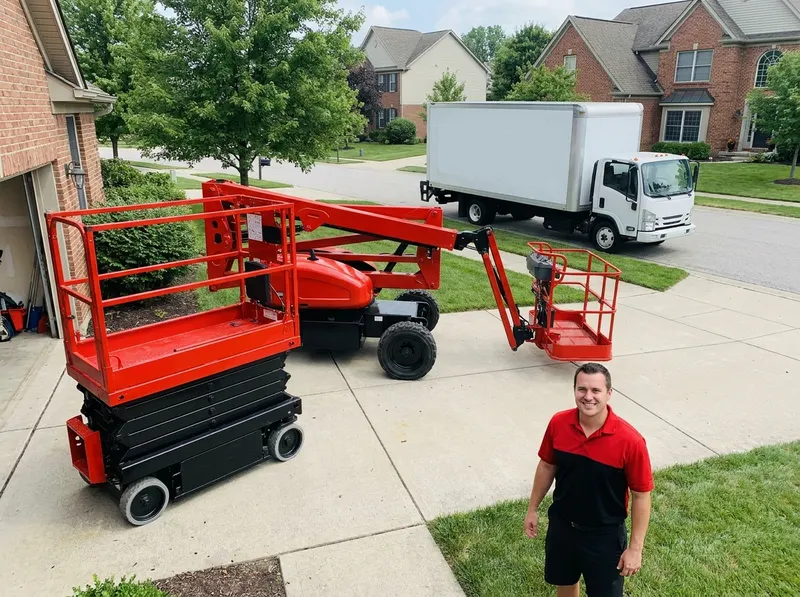
Navigating vertical maintenance projects requires matching the physical platform footprint to the project environment. A compact 19-foot electric scissor lift operates with a 32-inch chassis width, making it suitable for traversing standard commercial doorways, smooth concrete slabs, and interior retail installations along the Short North Arts District. For exterior renovations requiring outreach over porch overhangs, historical setbacks, or landscape beds in Victorian Village and German Village, an articulating boom lift provides up to 45 feet of vertical reach alongside critical horizontal outreach. If vertical ascent occurs over flat asphalt or indoor facilities, a scissor lift delivers broad platform deck space and 500-pound load capacities for multiple workers and tools. The direct operational trade-off centers on mobility versus footprint: scissor lifts elevate straight up on level grade, whereas articulating and telescopic booms operate on uneven outdoor soil at the expense of requiring wider curb clearances and outrigger setup zones.
Site conditions dictate machine selection and prevent drop-off delays. Residential driveways in Clintonville, Upper Arlington, and Bexley feature narrow widths, mature tree canopies, and aged concrete surfaces sensitive to point loading. Standard 26-foot electric slab scissor lifts weigh between 4,000 and 5,000 pounds, requiring plywood ground protection to prevent driveway tracking. Larger 45-foot rough-terrain diesel booms can exceed 13,000 pounds, demanding firm, level ground or stabilized pads. In industrial renovation corridors like Franklinton, Linden, and the Hilltop, dual-fuel rough-terrain units handle crushed gravel, mud, and uneven job site grades up to a 30% to 45% gradeability rating. Deliveries near heavy traffic lanes such as Grandview Avenue or High Street require property owners to secure staging areas clear of low-hanging utility lines before the transport flatbed arrives.
Logistics workflows follow three dependable steps. First, the project operator verifies the working height (calculated as platform height plus six feet for worker reach) and machine width restrictions. Second, haulers unload the unit using heavy-duty tilt trailers directly onto a stable staging zone, conducting a baseline function walk-around. Third, once the designated project window concludes, transport drivers collect the machine promptly to prevent job site congestion. An equipment rental operates on a dry-hire basis where the renter provides the certified operator, which differs from full-service crane or bucket-truck operations that supply onboard labor. Flat, transparent equipment fees eliminate surprise logistics costs, with on-site assessments confirming ground integrity when large-chassis boom access is required.
Every job gets a firm, written price after a free on-site visit.
Tell us about your scissor lift and aerial boom rentals job in Columbus and we'll send a clear, written quote, usually the same day.
 Complete Dumpster Rental