Securing an equipment rental service Columbus contractors and property owners can depend on keeps active jobs moving forward without unnecessary equipment downtime. Equipment rental service near me delivers commercial machinery directly to job sites throughout Franklin County to prevent expensive project delays.
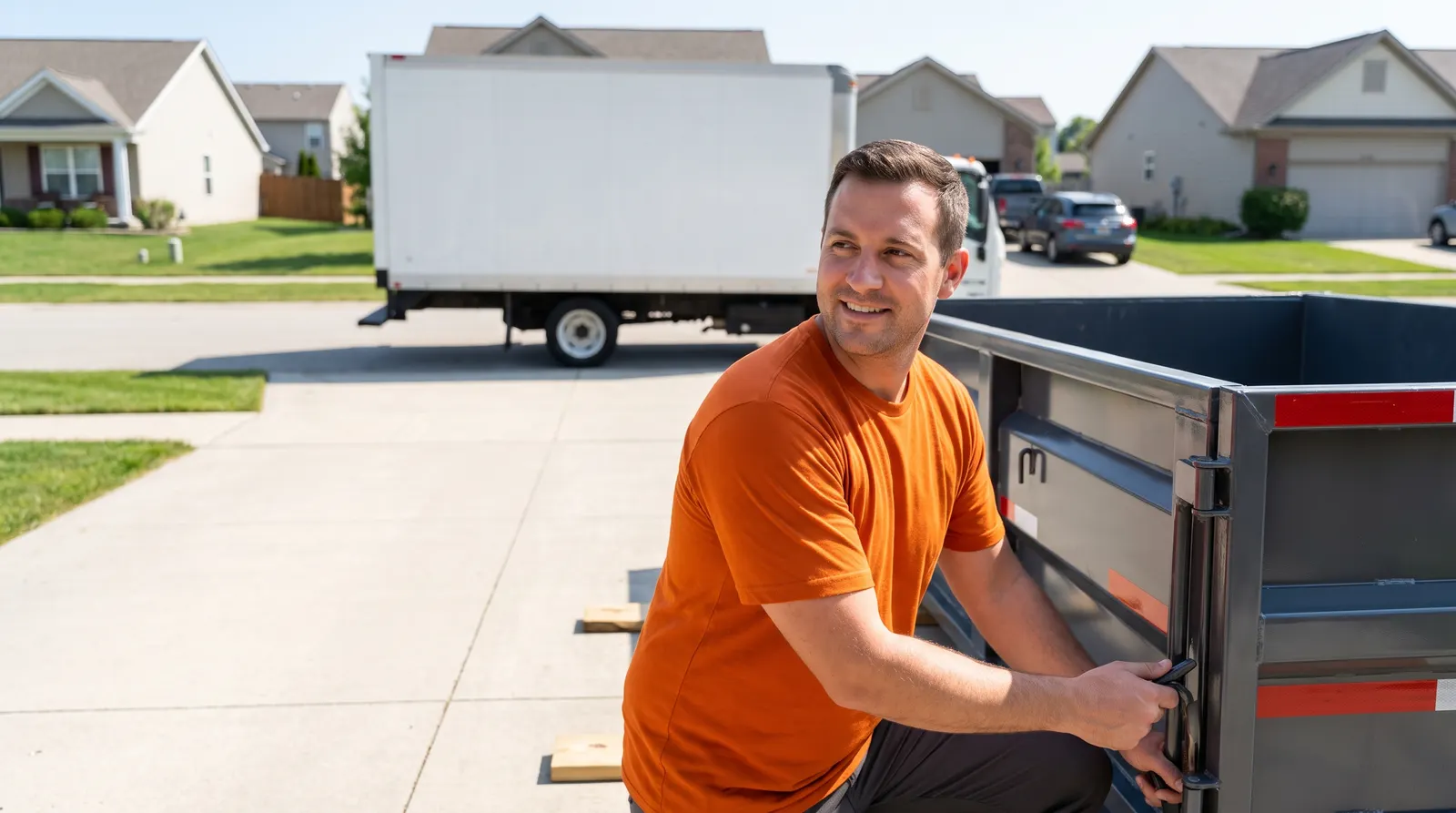
An equipment rental service company in Columbus is a machinery logistics provider that supplies commercial-grade earthmoving, aerial, compaction, and general construction equipment directly to local job sites on scheduled flexible terms.
Every service reflects the same meticulous attention to detail, whether it's a single job or a larger equipment rental service project across Columbus.
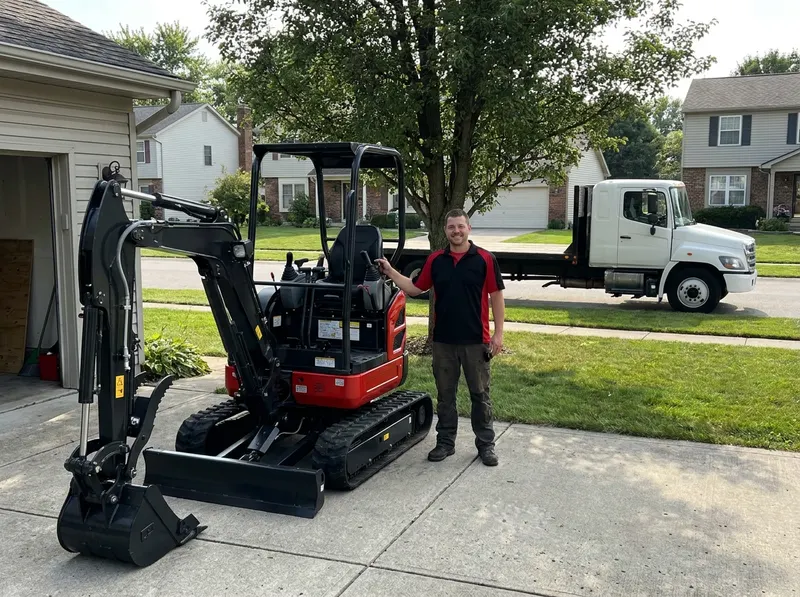
Compact tracked excavators ranging from 3,500 to 18,000 pounds operating weight provide digging depths down to 12 feet for foundation trenching, sewer line tie-ins, and basement egress cuts. Rubber tracks distribute ground pressure down to 4.2 PSI to protect delicate turf, while zero-tail-swing counterweights allow unobstructed excavation alongside brick facades and structural retaining walls. Each unit includes auxiliary hydraulic plumbing suited for quick-attach mechanical thumbs, hydraulic breakers, and variable auger drives.
Get a quote →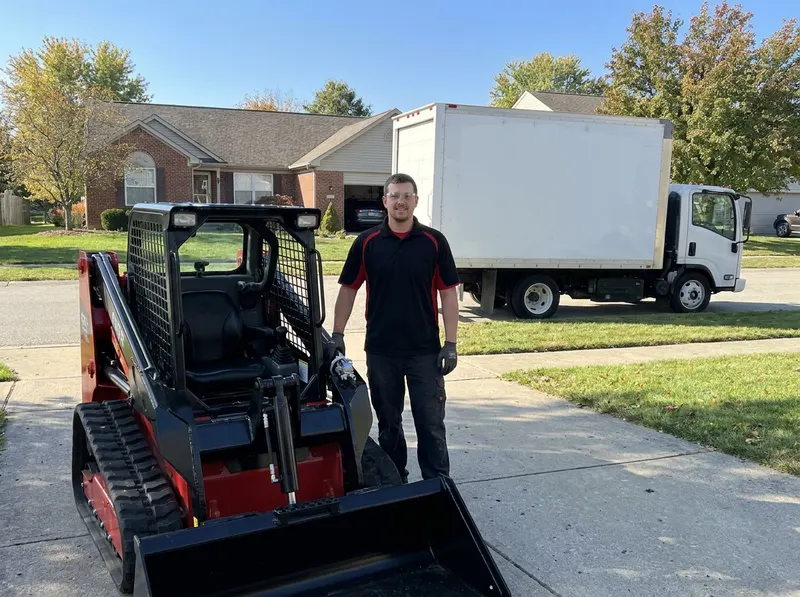
Skid steers and compact track loaders equipped with high-flotation rubber tracks supply between 1,800 and 3,200 pounds of rated operating capacity for earthmoving and site grading. Hydraulic quick-attach plates accommodate heavy-duty dirt buckets, hydraulic post hole augers, and bidirectional trenchers to manage bulk earth, sand, and crushed limestone base. Low ground pressure track profiles maintain forward momentum across saturated central Ohio topsoil without rutting landscaped property contours.
Get a quote →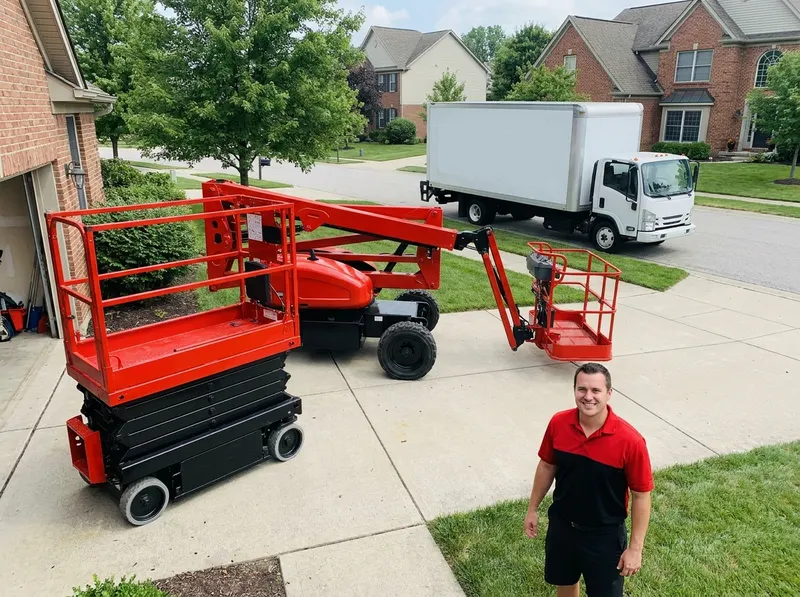
Electric slab scissor lifts offering 19-foot to 32-foot platform heights deliver stable elevated workstations for interior mechanical, electrical, and drywall crews working on finished flatwork. Rough-terrain articulated boom lifts provide working heights up to 60 feet with horizontal outreach capabilities of 35 feet to navigate complex roof angles and building setbacks. Integrated foam-filled non-marking tires protect finished interior architectural surfaces while ensuring traction across rugged exterior ground.
Get a quote →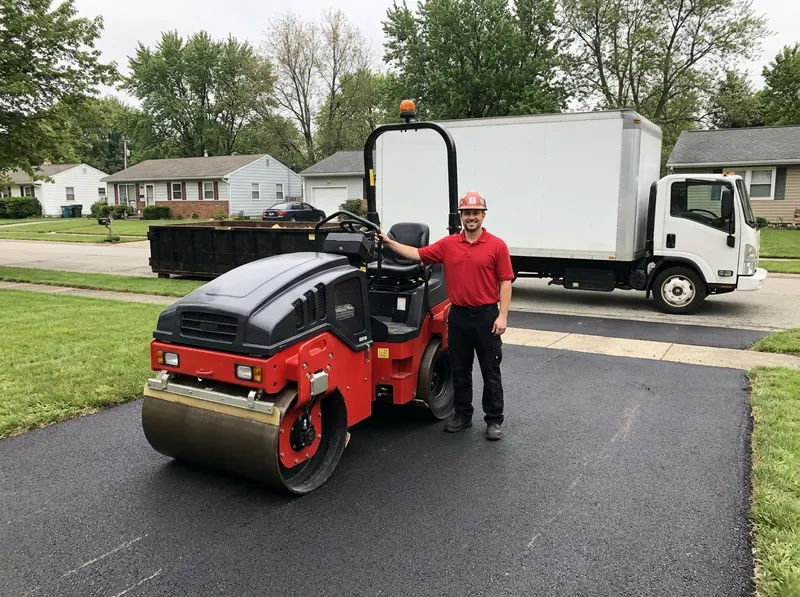
Walk-behind vibratory plate compactors and ride-on double-drum rollers generate centrifugal compaction forces from 3,000 to 15,000 pounds. These units seat gravel sub-bases, structural footing trenches, and hot-mix asphalt driveways to specified proctor density standards before concrete pours. Standard reversible directional controls and dual water-sprinkler systems prevent asphalt adhesion to drum surfaces during asphalt paving and patching runs.
Get a quote →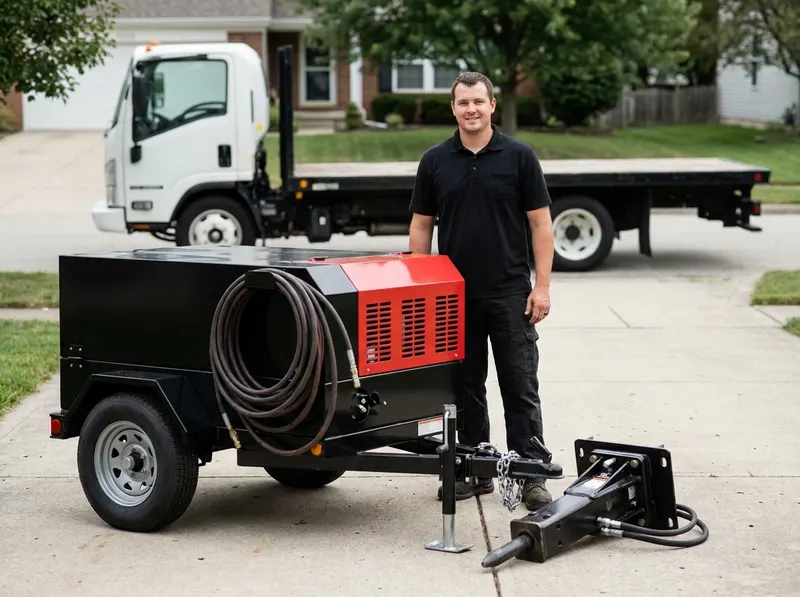
Diesel rotary screw air compressors delivering 185 CFM at 100 PSI power pneumatic jackhammers, concrete pavement breakers, and sandblasting units. Towable hitches allow immediate transport across commercial facilities, municipal curb repairs, and structural demolition zones. Sound-attenuated metal enclosures keep operating noise levels below 76 dBA at 23 feet, allowing crews to work near populated urban corridors and hospital quiet zones without creating excessive street-level noise disturbances.
Get a quote →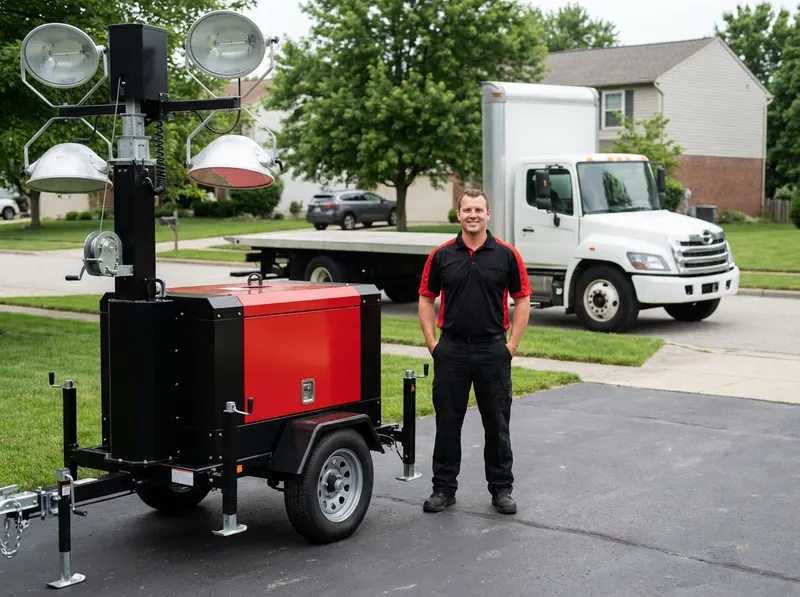
Mobile diesel-powered light towers deliver 440,000 lumens across multi-acre job sites to illuminate night construction along municipal roads, while sound-attenuated generators supplying 20 kW to 70 kW provide temporary utility power for continuous operations, charging trailers, and industrial heaters. Extended-run fuel reservoirs accommodate up to 60 continuous hours of unattended runtime under sustained load conditions, minimizing refilling cycles during continuous utility operations.
Get a quote →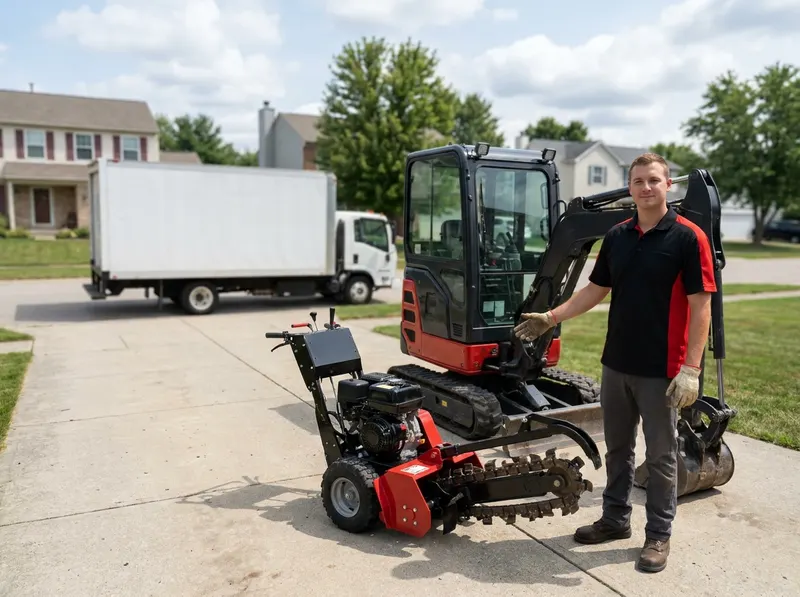
Walk-behind and ride-on hydraulic trenchers dig precise utility channels ranging from 4 to 12 inches wide and up to 48 inches deep. Heavy-duty carbide shark teeth slice through packed clay, embedded river gravel, and tough root systems to lay electrical conduits, municipal water lines, and residential irrigation runs without tearing up entire yard expanses. Integrated backfill blades allow rapid channel closure following line installation to restore property grades immediately.
Get a quote →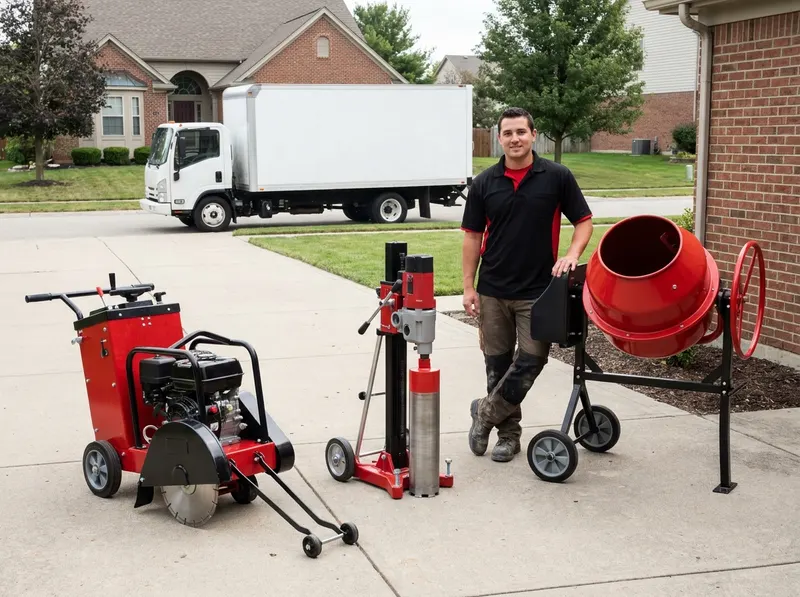
Walk-behind concrete saws featuring 14-inch to 20-inch diamond cutting wheels provide clean, vibration-free expansion joint cutting and deep slab separation up to 8 inches in depth. Handheld electric or gas power cutters, companion core drill rigs, and portable mortar mixers give masonry and flatwork specialists the precise torque necessary to modify reinforced cured concrete, brick structures, and precast foundation panels.
Get a quote →You get a firm, itemized quote for your equipment rental service before any work begins, no surprises, no pressure.
Careful prep, tidy work, and a full cleanup when we are done. We treat your home and belongings like our own.
The same trusted, background-checked team from the first call to the final check.
Selecting appropriate job site machinery depends strictly on material volume, reach elevation, turning radius, and surface load bearing constraints. If your project involves foundation excavation, utility trenching through wet clay, or heavy soil extraction within open acreage, choose a tracked hydraulic excavator ranging between 6,000 and 18,000 pounds operating weight. If the job involves grading, backfilling aggregate, or moving palletized hardscaping within tight residential lot lines, choose a compact track loader with rubber treads.
The operational trade-off centers on mass versus maneuverability: larger mini-excavators deliver faster dig depths and continuous 360-degree swing cycles, but their transport width demands wide gate clearances and heavier curb ramp protection. For vertical exterior painting, roof decking, or structural framing, choose an articulated articulating boom lift if workers must reach over building setbacks and parapet walls; choose an electric vertical scissor lift if work happens exclusively over flat concrete slabs. The operational trade-off balances reach versatility against base footprint, as articulating booms require substantial outrigger clearance while scissor lifts remain strictly limited to plumb, non-cambered ground.
For site-wide compaction, selecting between a reversible vibratory plate compactor and a dual-drum ride-on roller requires balancing access width against required lift thickness: plate compactors access narrow 18-inch to 24-inch footing trenches to consolidate cohesive soils in shallow 6-inch to 8-inch lifts, whereas 3-ton to 5-ton tandem rollers compact broad base courses across entire parking bays in a fraction of the operating passes. The trade-off lies in transport logistics and maneuverability against high centrifugal impact force per linear foot of drum contact. When planning power distribution, selecting a portable inverter generator satisfies small intermittent corded tools up to 3,000 watts, but prolonged pneumatic demolition or simultaneous industrial drying setups demand a continuous-duty 25 kVA to 70 kVA diesel mobile generator coupled with high-cfm towable air compressors.
Choosing smaller output units introduces thermal overload risks and mechanical motor stalls, whereas oversized trailer-mounted generators require heavy towing vehicles, wider turning radii on residential roadways, and continuous fuel logistics.
Every project gets a firm, written price after a free on-site visit. Ranges below for orientation.
Tell us about your equipment rental service job and we'll send a clear, written quote, usually the same day. Or just call and talk to a real Columbus pro.
(380) 267-1475
Navigating the deep clay geological strata of Franklin County requires specialized low-ground-pressure machinery to prevent machine immobilization during the damp spring thaw from April through June. Historic urban districts like German Village and Victorian Village present narrow brick alleys and tight property clearances, making zero-tail-swing excavators and rubber-tracked loaders necessary to avoid damaging stone curbs and centuries-old foundations. Flatwork projects near the Scioto Mile Promenade, Ohio State University Campus, and the Franklin Park Conservatory require strict scheduling to align with local noise ordinances and peak traffic corridors along Interstate 71, Interstate 70, and State Route 315. Dense commercial development corridors along Interstate 270 and the outer rim suburbs like Upper Arlington and Bexley often mandate strict off-street unloading protocols to maintain uninterrupted school-zone and rush-hour traffic movements. Delivering excavators, compaction gear, and rough-terrain booms through urban corridors such as the Short North Arts District and Franklinton demands tight logistical coordination with local parking authorities, as narrow curb lanes and overhead electric trolley or utility lines require spotters during low-boy flatbed ramp deployment. During late fall freeze cycles in November and early December, sub-base preparation across central Ohio relies heavily on targeted hydraulic plate compaction and heated site shelters before frost layers penetrate below standard 32-inch foundation footings.
Free estimates for Columbus & the surrounding area.
 Complete Dumpster Rental